Fixing knitting mistakes
Every knitter makes mistakes. Learn how to spot them, rescue a dropped stitch, undo stitch by stitch, rip back safely and add lifelines that save your work.
Updated
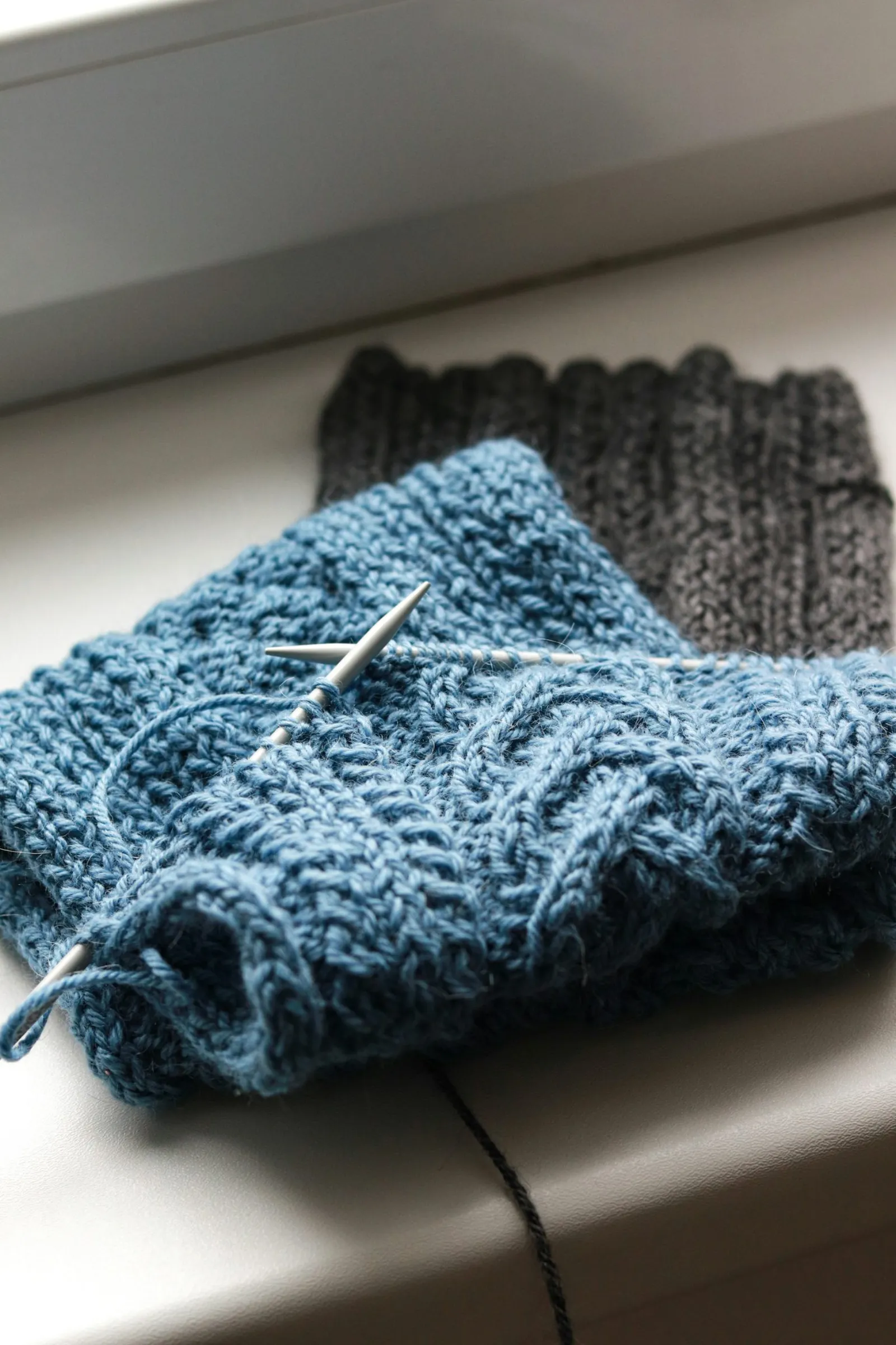
Mistakes are part of knitting. The good news is that almost all of them can be fixed, and the fixes are skills you will use many times. This guide covers the most common rescues, from the quick to the cautious.
Learn to read your knitting
Before you fix anything, learn what the stitches look like.
- A knit stitch looks like a small V.
- A purl stitch looks like a small bump or a horizontal bar.
- A stitch in the row below has a V shape too, and you can follow it down column by column.
Look at your work often. A mistake you see after one row is far easier to fix than one you see after twenty.
Count rows and stitches
Count stitches at the end of each row, at least when you are learning. If your count is off, the mistake is recent.
To count rows in stockinette, count the V shapes in one column of stitches. In garter stitch, count the ridges and multiply by two. Mark a row with a thread or a stitch marker so that you can count from it later.
Gordon’s tip: If you find a mistake and feel cross, put the work down and take a walk. Gordon always says a mistake looks smaller after fresh air.
Rescue a dropped stitch
A dropped stitch is a stitch that has slipped off the needle and started to run down.
- Stop. Do not pull on the work.
- Find the loop that dropped. It sits lower in the fabric, with horizontal strands (ladders) above it.
- Take a crochet hook that is about the size of your needle or a little smaller.
- In stockinette, with the right side facing you, put the hook through the loop from front to back.
- Catch the lowest horizontal strand and pull it through the loop. You have made one new stitch.
- Repeat with each strand, going up the ladder until you reach the needle.
- Place the last loop on the left needle, making sure it is not twisted.
On the wrong side or in purl rows, turn the work and fix it from the knit side if you can. It is easier.
Tinking: unknit one stitch at a time
Tink is knit spelled backwards. It is how you undo stitches one by one, so the stitches stay on the needle.
- Hold the yarn at the back of the work for a knit stitch.
- Put the left needle tip into the stitch below the one on the right needle, from front to back.
- Slide the right needle stitch off, and gently pull the working yarn. The stitch above is undone.
- Repeat for each stitch you want to undo.
For a purl stitch, hold the yarn at the front and work in the same way. Tinking is slow but safe. It is best for fixing a mistake in the last row or two.
Rip back to a lifeline
When the mistake is many rows down, you can rip back, pull out the needle, and undo the rows. This is risky if you do not have a safety net.
Add a lifeline before the tricky part of a pattern. A lifeline is a smooth thread, such as dental floss or cotton, run through the stitches of one row.
- Thread a tapestry needle with a long piece of thread.
- Pass it through every stitch on the needle, in order, and around any markers.
- Leave the ends hanging, and keep knitting. The thread follows the row.
When you need to rip back, take the needle out of your work and pull the yarn gently down to the lifeline. The thread holds the stitches. Slip the needle back through the stitches on the lifeline, and the row is ready to knit again. Use a smaller needle for the stitches if you like, then change back to your normal size.
If you do not have a lifeline, rip back one row at a time and put the stitches back on the needle with care. Check that they all sit the same way round, with the right leg of each stitch at the front.
Habits that help
- Count stitches often, and especially before and after shaping.
- Place a lifeline after you finish a complicated section.
- Work in good light.
- Stop when you are tired. Most mistakes happen late in the evening.