Gauge and swatching
Gauge is how many stitches and rows fit in a set measurement. A small swatch tells you whether your project will come out the size the pattern promises.
Updated
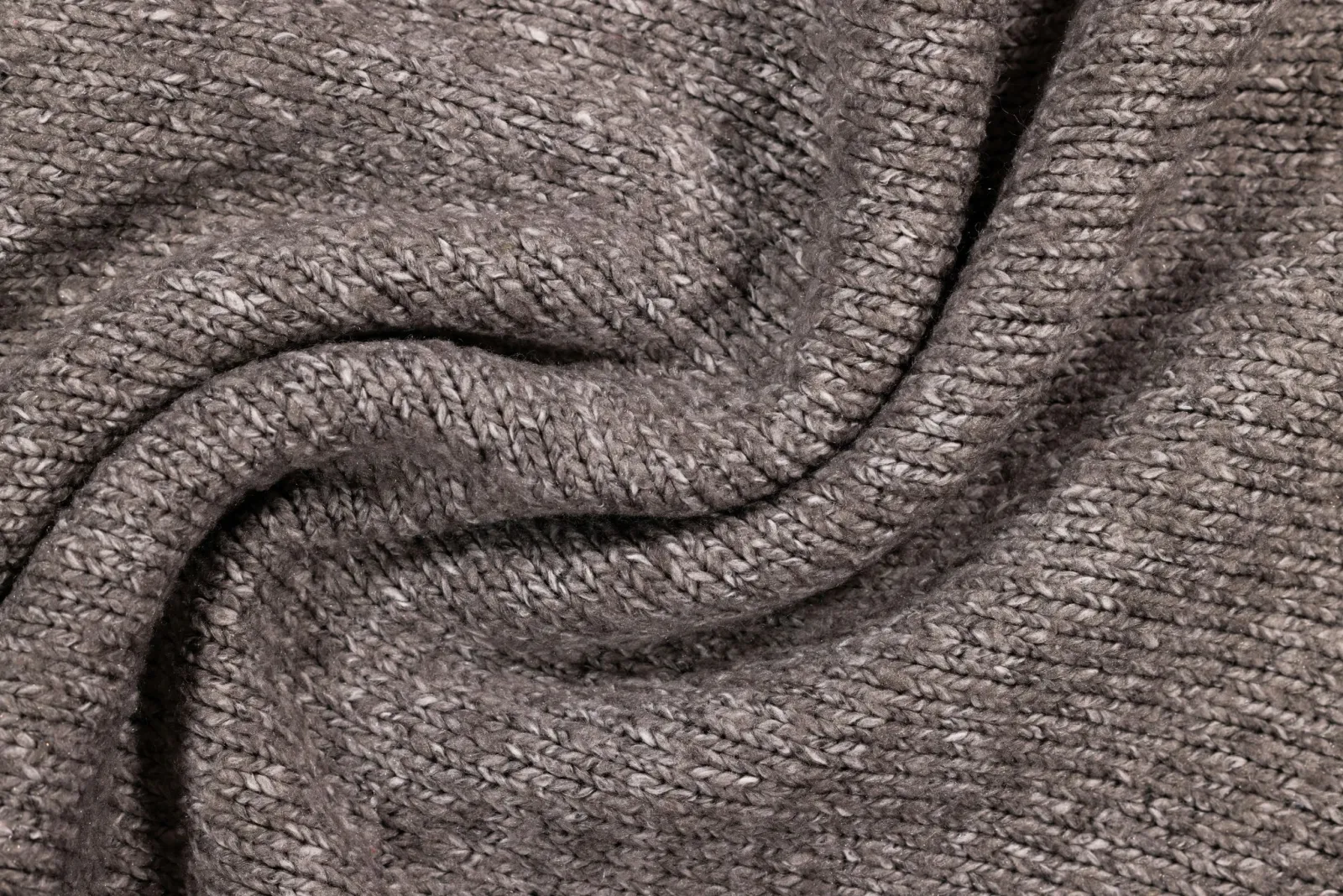
Gauge, sometimes called tension, is the number of stitches and rows that fill 10 cm of fabric. It is the reason two knitters can follow the same pattern and make garments in different sizes. A swatch is a small sample you knit to find out your own gauge.
Why gauge matters
Imagine a pattern says 20 stitches make 10 cm, and you cast on 100 stitches. The piece should be 50 cm wide. If you knit more loosely and get 18 stitches per 10 cm, those 100 stitches give you about 55.5 cm. That is 5.5 cm wider, and the whole garment will be a different size.
Gauge also changes the look and feel of the fabric. A tight gauge makes a stiff fabric, and a loose gauge makes a drapey one.
How to knit a swatch
- Use the same yarn and needles as your project, and the same stitch pattern. If the pattern is in stockinette, knit stockinette.
- Cast on more stitches than the gauge asks. If the pattern gives the gauge over 10 cm, cast on enough for about 15 cm.
- Knit a few rows of garter stitch at the start and end, and a few stitches at each side, so the edges do not curl. Work the middle in the stitch pattern.
- Knit until the swatch is about 15 cm tall.
- Bind off loosely.
If the project is knitted in the round, remember that many people purl more loosely or more tightly than they knit. Flat stockinette uses both stitches and in-the-round stockinette uses only knit, so your gauge can differ. For a true result, swatch in the round as well, or ask the pattern how it was measured.
Gordon’s tip: Think of a swatch as a small gift to your future self. It costs a little yarn and saves you from knitting a jumper you cannot wear.
Wash and block it
Do not measure straight off the needles. Wash the swatch the way you plan to wash the finished piece. Gently squeeze out the water, lay it flat and pat it to its natural shape. Let it dry fully.
Yarn often changes in the wash. Wool can bloom and relax, and cotton can stretch. The measurements you take after washing are the ones that matter.
Measure it
Lay the dry swatch flat without stretching it. Place a ruler across the middle. Count the stitches in 10 cm, and the rows in 10 cm. A pin at each end of the measurement helps. If you land between stitches, count the part of a stitch as a half or a quarter.
Compare your numbers with the pattern.
- Too many stitches in 10 cm. Your stitches are too small. Change to larger needles.
- Too few stitches in 10 cm. Your stitches are too big. Change to smaller needles.
Try a needle one size up or down (usually 0.25 mm to 0.5 mm) and swatch again. It may take two or three tries. That is normal.
When you cannot match both
Sometimes you get the stitch gauge right but the row gauge is slightly off. Stitch gauge is more important for width and fit. In garments, you can often work to a length in centimetres instead of counting rows.
If your stitch gauge is close but not exact, you can choose a different size in the pattern, which gives you a different number of stitches. For example, if your gauge is a little looser than the pattern’s, a smaller size may land at the size you want.
Write your result on the swatch itself, or in your project notes: yarn, needle size, stitches and rows per 10 cm, and how you washed it. Keep the swatch with the leftover yarn. Next time you use the same yarn, you may not need another one.