Yarn weights and substitution
Yarn comes in standard weights, from lace to super bulky. Learn the names, how fibres behave, and how to swap one yarn for another and work out how much to buy.
Updated
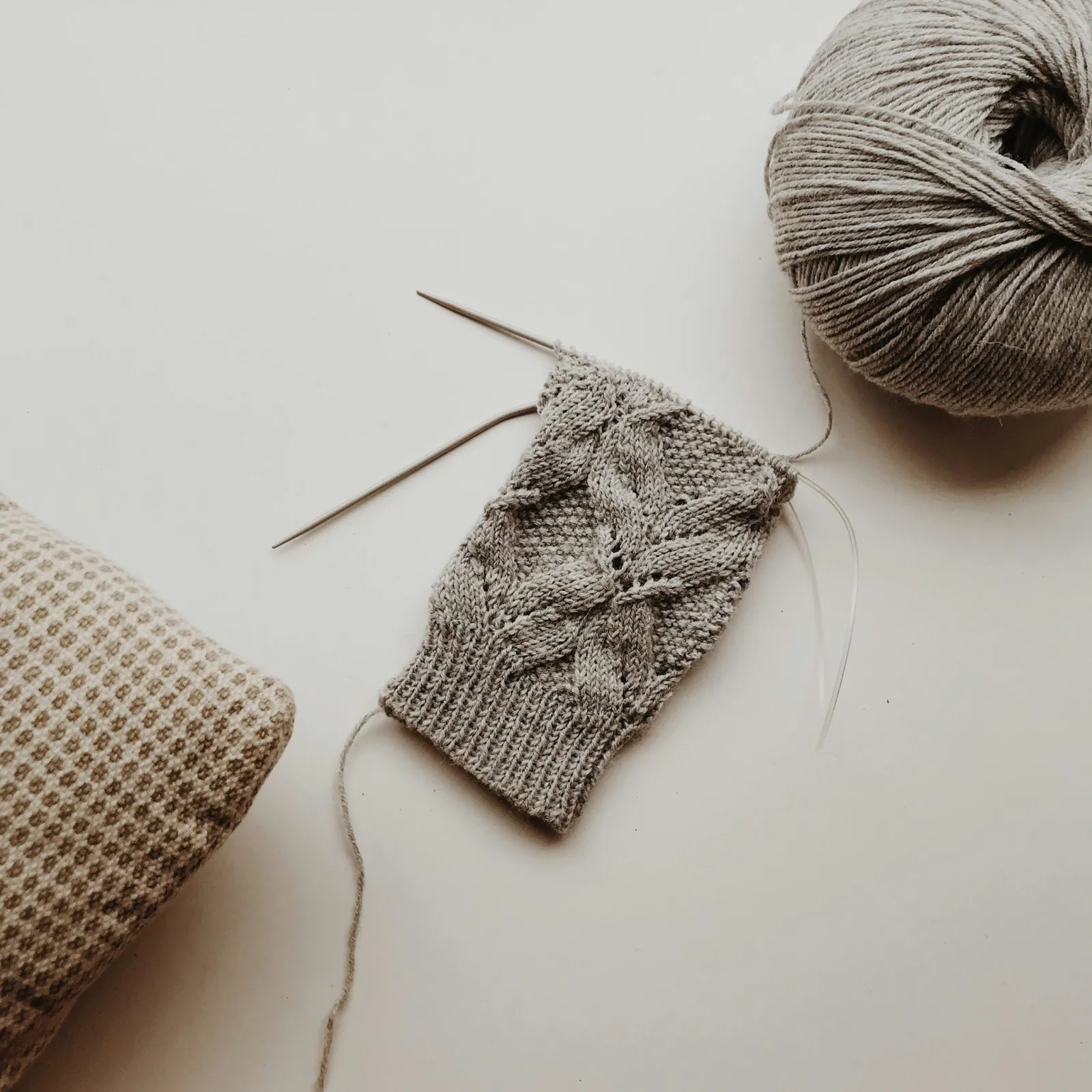
Yarn is sold by weight category, which describes thickness, not how heavy the ball is. Knowing the categories helps you read patterns and choose a replacement when the yarn in the pattern is hard to find. A swap takes a little arithmetic, but it is not difficult.
The weight categories
Names differ between countries, and brands do not agree exactly, so treat this as a guide.
- Lace. Very fine. Often called 1 ply or 2 ply in the UK.
- Fingering or sock. Called 4 ply in the UK and Australia.
- Sport. Sometimes called 5 ply in Australia.
- DK (double knit). Called 8 ply in Australia.
- Worsted. About 10 ply in Australia. UK knitters often use aran for something similar.
- Aran. Slightly thicker than worsted, depending on the brand.
- Chunky or bulky. Often 12 ply in Australia.
- Super chunky or super bulky. Very thick, for quick projects.
Ply used to mean the number of strands twisted together. Today it is only a name for thickness, since a “4 ply” yarn may have more or fewer strands.
Thicker yarn knits up faster and gives a thicker, warmer fabric. Thinner yarn gives a lighter fabric and a finer stitch definition.
Fibre basics
The fibre matters as much as the weight.
- Wool is springy, warm and forgiving. Merino is soft, other breeds are rougher but hard-wearing.
- Cotton and linen are cool and have little stretch. They show stitches clearly but can tire the hands.
- Alpaca and mohair are soft and fluffy with a halo. They are warm and light but can drape and stretch.
- Silk adds shine and drape.
- Acrylic and other synthetics are easy to wash and often cheap. They hold less heat and may not block the way wool does.
Blends mix these qualities. A little nylon in wool sock yarn adds strength.
How to swap yarn
- Match the weight. Choose the same category as the pattern.
- Match the gauge. Look at the gauge printed on your yarn’s label, and compare it with the pattern’s gauge. They should be close.
- Compare length per 100 g. Metres per 100 g tell you more than the weight in grams. Close numbers mean close thickness.
- Think about fibre. A drapey silk blend will not behave like springy wool. A pattern designed for one may not suit the other.
- Swatch. The label is a guess. The swatch is the truth.
Gordon’s tip: Keep a ball band or a note of the yarn you used. Gordon has a nose for forgetting which yarn went where.
How much to buy
Patterns usually give the total length needed in metres, or the number of balls with each ball’s length. Work from metres.
Worked example. A pattern needs 800 m of yarn. The yarn in the pattern comes in balls of 100 g with 200 m each. That is 800 divided by 200, or 4 balls.
You want to use a yarn with 100 g and 150 m per ball. Divide 800 by 150. The answer is 5.33. You cannot buy a third of a ball, so you need 6 balls.
Then add a margin. Many knitters buy 5 to 10 per cent extra, or one extra ball, in case of mistakes, swatching and a different gauge. With a margin of about 10 per cent, 880 m divided by 150 gives 5.87, which also rounds up to 6 balls.
Check the dye lot, too. If the balls come from different lots, the colour can differ slightly. Buy all the balls at once if you can.
A cautious swap
A swap works best when the replacement is close in weight, gauge, length and fibre. If you change several of these at once, the result can surprise you. Start with the easy swaps: same weight, same fibre family, close gauge. Knit a swatch, wash it, and check that the fabric feels right before you commit.